Fettercairn
Highland
Scotland
About
This traditional distillery set in the foothills of the wild Cairngorm Mountains was once owned by the father of a British Prime Minister.
History
One of the main attractions of Laurencekirk, the village nearest to Fettercairn, is a huge, ostentatious red sandstone archway spanning the road that commemorates the visit to the village of Queen Victoria and Prince Albert in 1861. Fettercairn has similarly grand pretensions. It was founded in 1825 by the local landowner Sir Alexander Ramsay, who then sold his estate, distillery and all, in 1830 to Sir John Gladstone, father of four-time British Prime Minister William Ewart Gladstone.
However, the Gladstone family were hands-off owners (fun though it is to imagine ‘The People’s William’ getting to grips with distillation). Allowing the distillery to be run by tenants, they retained ownership until 1923. A short period (mostly in mothballs) under the control of Ross & Coulter ended when Fettercairn was sold to Associated Scottish Distilleries (ASD, the Scotch arm of National Distillers of America which, at its height, owned Bruichladdich, Glenury Royal, Glen Esk, Glenlochy, Benromach and Strathdee).
When ASD ceased trading in 1954, its estate was split up and Fettercairn ended up in private hands. Its new owner, Tom Scott Sutherland, had the distillery until 1971, when it was bought by Tomintoul-Glenlivet ; from there it joined Whyte & Mackay.
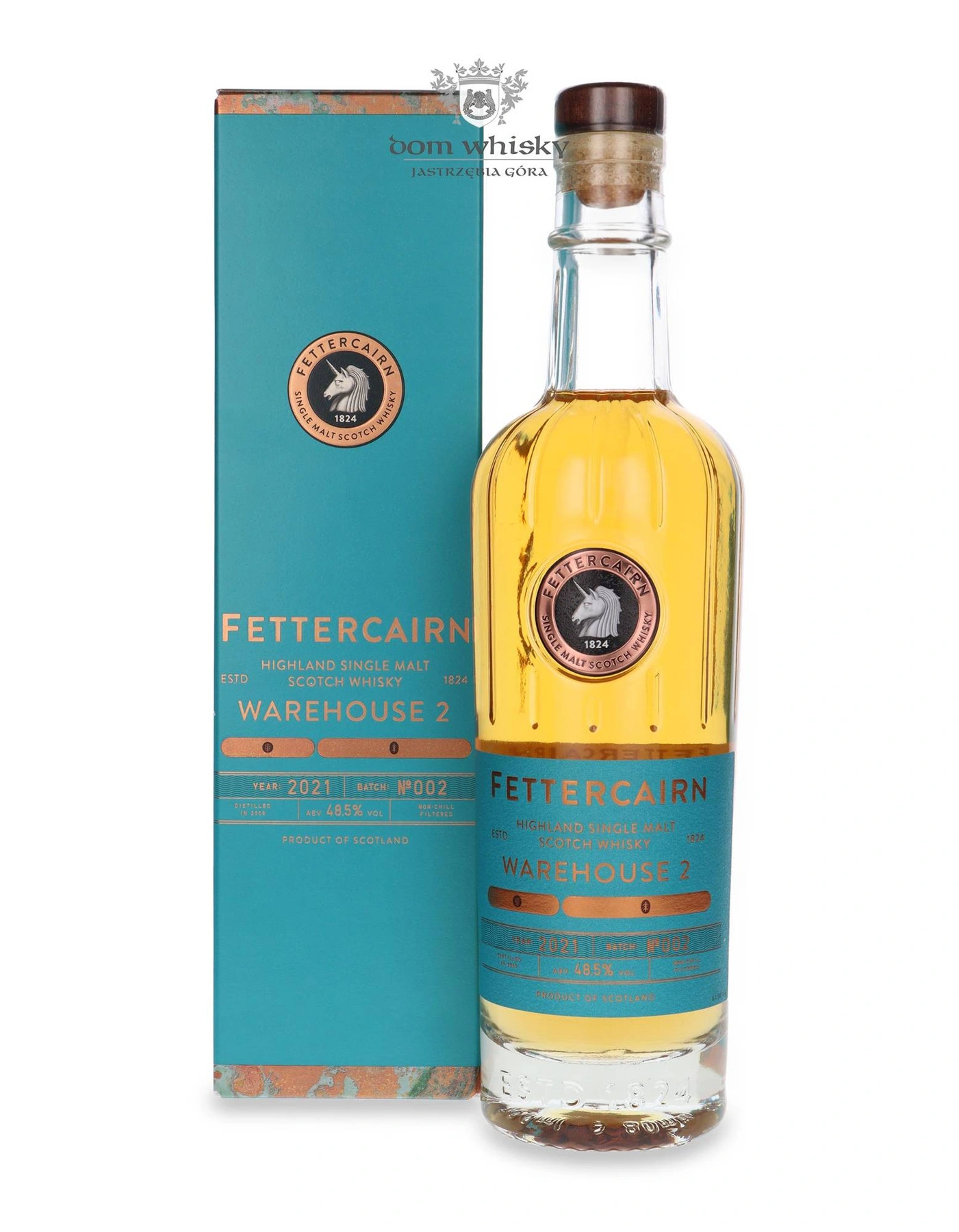
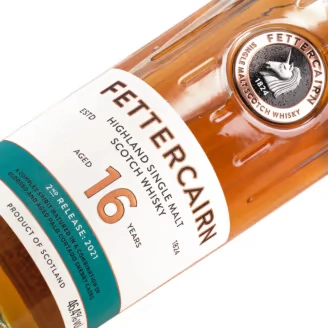
Although mainly a contributor to the firm’s blends, it has long been bottled as a single malt. A more concerted effort started in 2009 when a range of aged variants and a pair of no-age bottlings, Fior and Fasque (the name of the Fettercairn estate), was released.
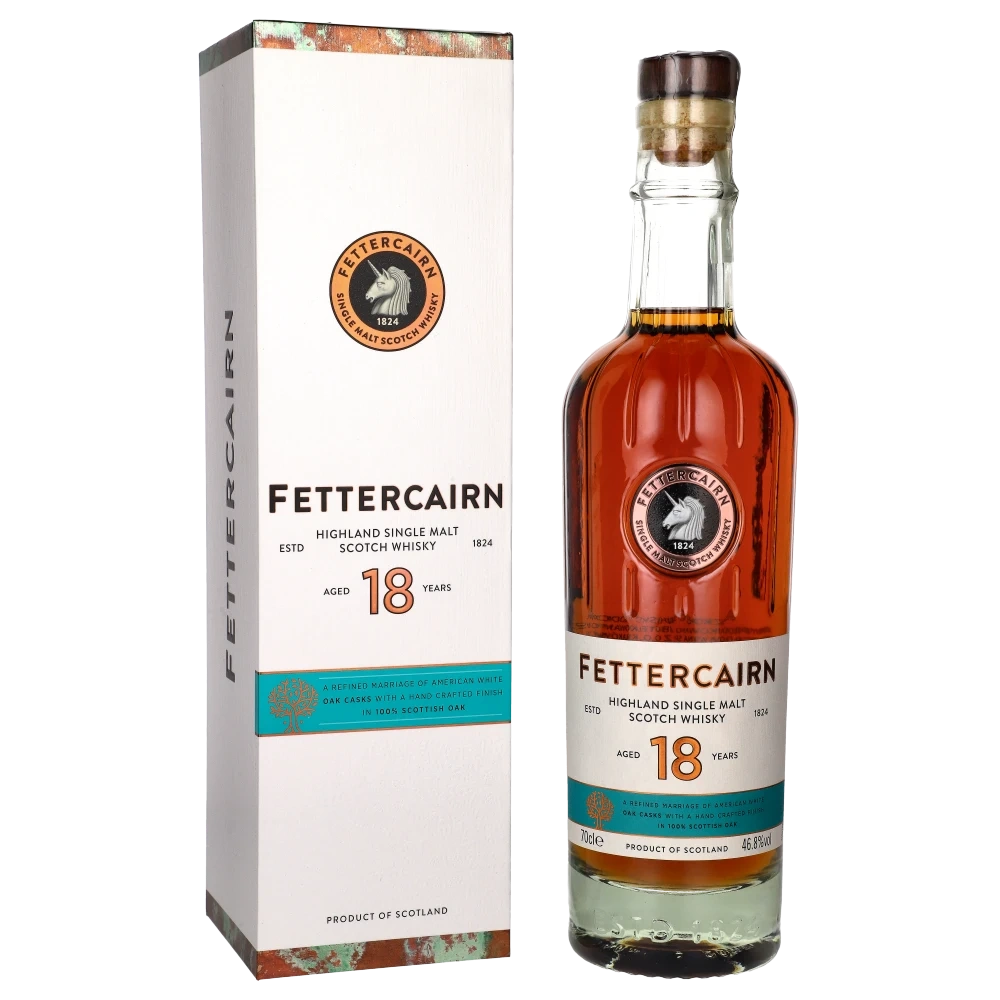
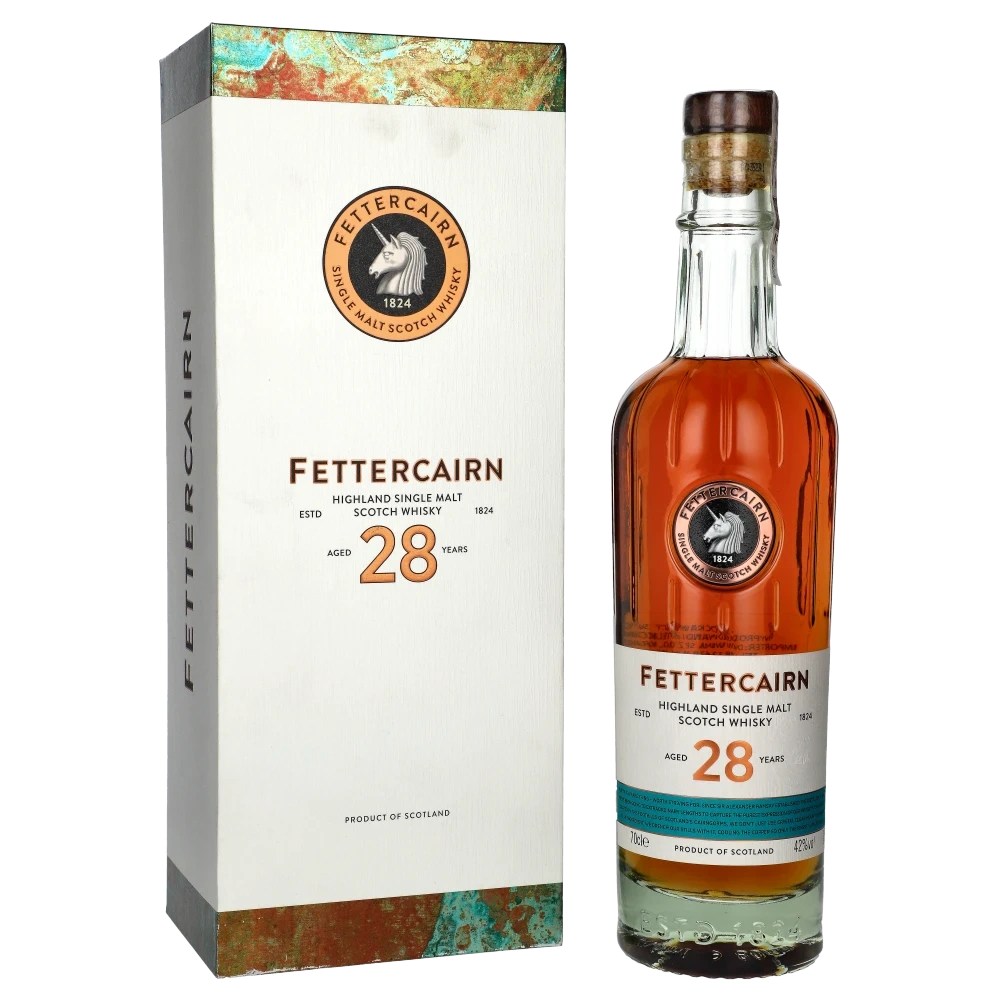
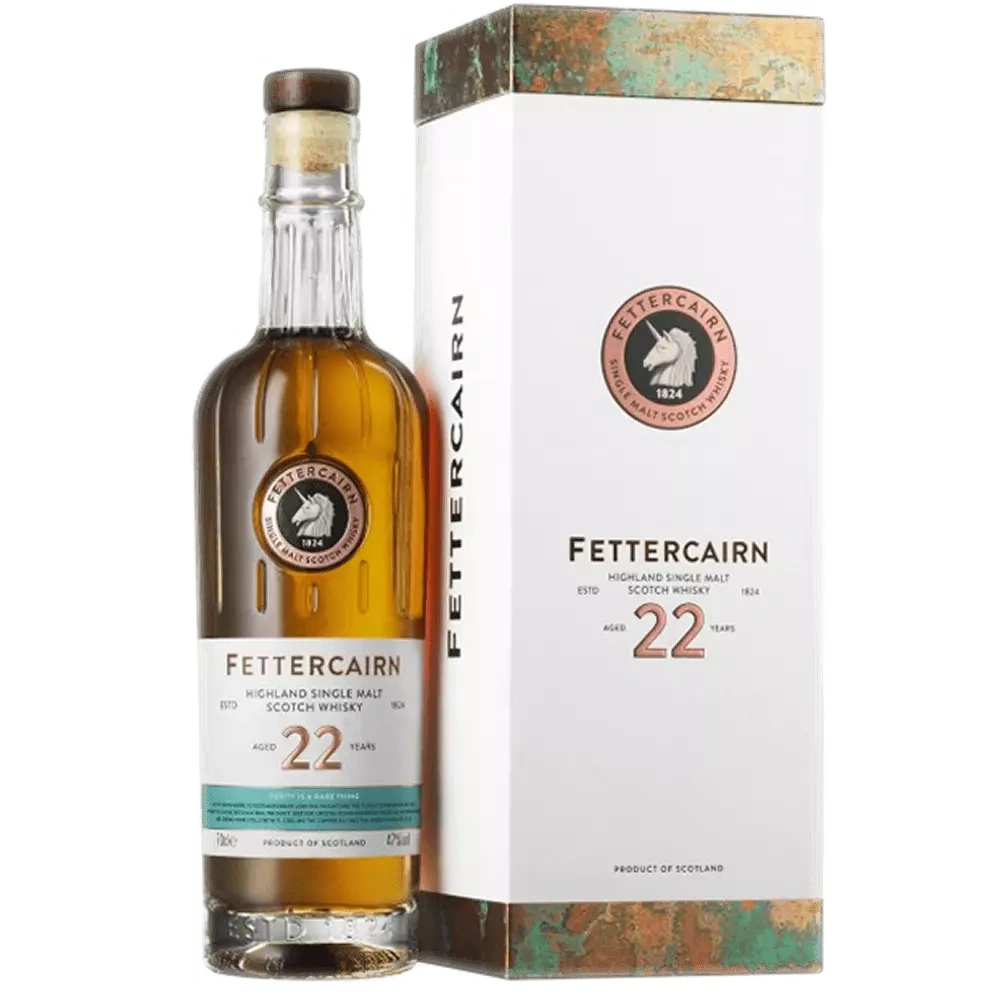
In 2018 Fettercairn was relaunched by Whyte & Mackay with a new range of single malts aged between 12 and 50 years old.
Timeline
- 1825 Fettercairn built by local landowner Sir Alexander Ramsay
- 1830 Ramsay sells the estate and distillery to Sir John Gladstone
- 1887 The distillery is forced to close following a fire
- 1923 The distillery is sold to Ross & Coulter
- 1926 Fettercairn is temporarily closed
- 1939 The distillery is acquired by Associated Scottish Distillers who reignite the stills
- 1954 ASD stops trading and Fettercairn is sold to Tom Scott Sutherland
- 1966 With demand strong, Fettercairn's stills are increased from two to four
- 1971 Fettercairn is sold to Tomintoul-Glenlivet
- 1973 The company is bought by Whyte & Mackay
- 1989 The distillery's visitors' centre officially opens to the public
- 2007 United Spirits buys Whyte & Mackay
- 2014 Whyte & Mackay is sold to Emperador
- 2018 Fettercairn is relaunched with a new single malt range and bottle design
Production facts
- Capacity (mlpa)
- 2.2
- Condenser Type
- Shell and tube
- Fermentation Time
- Minimum 48hrs
- Filling Strength
- 63.5%
- Grist Weight (t)
- 5
- Heat Source
- Steam
- Malt Specification
- Some heavily peated produced – 55ppm
- Malt Supplier
- Various
- Mash Tun Type
- Traditional
- New-make Strength
- 69%
- Spirit Still Shape
- Lampglass
- Stills
- 4
- Warehousing
- 30,000 casks – all dunnage
- Wash Still Charge (l)
- 13,000
- Wash Still Shape
- Lampglass
- Washback Charge (l)
- 25,000
- Washback Size (l)
- 25,000
- Washback Type
- Wood
- Washbacks
- 8
- Water Source
- Spring
- Wort Clarity
- Clear
- Yeast Type
- Various
Ownership
Current owner
Parent company
Previous owners (7)
Sir Alexander Ramsay
1825–1830
The Gladstone Family
1830–1923
Ross & Coulter
1923–1927
James Mann
1927–1939
Associated Scottish Distillers
1939–1954
Tom Scott Sutherland
1954–1971
The Tomintoul Glenlivet Distillery
1971–1973