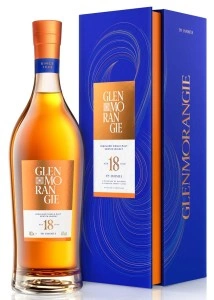
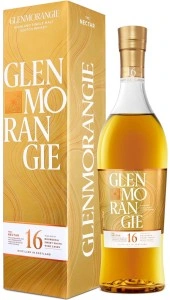
Glenmorangie
Highland
Scotland
Owned by:
LVMH
Core bottlings
About
The attention paid to its pioneering work in wood management has resulted in Glenmorangie’s distillation regime being slightly overlooked.
History
Situated next to the Dornoch Firth in a series of handsome red sandstone buildings, the Glenmorangie distillery started life as the local brewery for the town of Tain. In 1843, William Matheson converted it to a distillery and it remained in the family until 1887, when it was sold to the Glenmorangie Distillery Co, co-owned by the Maitland brothers and Duncan Cameron.
After the First World War, the business was sold to a partnership between two blending and broking firms, Macdonald & Muir and Durham & Co, soon passing entirely to the former, which used the whisky for blends such as Highland Queen. Although it was bottled in small quantities from the 1920s, a change of strategy in 1959 saw Glenmorangie revived as a single malt that soon became Scotland’s biggest seller.
This was not the first time that this had happened, however. Records show that at the end of the 19th century Glenmorangie was being sold at The Savoy and other top-end London hotels, as well as being exported.
Early success in the infant single malt category resulted in two more stills being added to the original pair in 1976, a number which was doubled again in 1990. In 2009, four more were added, along with a larger mash tun and extra washbacks.
Five years previously, French luxury goods firm Louis Vuitton Moët Hennessy (LVMH) had bought the firm (also including Ardbeg) for £300m. More recently, extra warehousing has been built, the result of a decision to mature and vat all the production on-site.
In January 2018, it was announced that a new stillhouse would be built, housing two more of Glenmorangie’s distinctive, long-necked stills, plus a new mash tun and washbacks. The new facility will enable more experimental runs, with indications that innovations such as the use of stainless steel condensers will be explored.
Timeline
- 1843 William Matheson converts the Morangie brewery in Tain into a distillery
- 1887 The distillery is purchased by the Glenmorangie Distillery Co.
- 1918 Macdonald & Muir and Durham & Co acquire the Glenmorangie Distillery Co
- 1976 Two additional two stills are installed
- 1990 A further four stills are fitted and the old stillhouse is converted into a reception centre and museum
- 1996 Glenmorangie releases two wood-finished expressions: madeira and sherry
- 1997 A museum also opens at the site
- 2004 Glenmorangie Company buys the Scotch Malt Whisky Society; the Macdonalds sell the group to LVMH
- 2009 Four more stills are added
- 2018 Plans are unveiled to add another two stills, in a new stillhouse
Production facts
- Capacity (mlpa)
- 6
- Condenser Type
- Shell and tube
- Fermentation Time
- 52hrs
- Filling Strength
- 63.5%
- Grist Weight (t)
- 9.8
- Heat Source
- Steam kettles and coils
- Malt Specification
- Maximum 2ppm
- Malt Supplier
- Various
- Mash Tun Type
- Full Lauter
- New-make Phenol Level
- Negligble
- New-make Strength
- 69%
- Single Malt Percentage
- 100%
- Spirit Still Charge (l)
- 7,400
- Spirit Still Shape
- Very tall necks with boil pots
- Spirit Still Size (l)
- 8,200
- Stills
- 12 (6 wash, 6 spirit)
- Warehousing
- Primarily at distillery, Dunnage, Racked and Palletised
- Wash Still Charge (l)
- 12,300
- Wash Still Shape
- Very tall necks with boil pots
- Wash Still Size (l)
- 13,000
- Washback Size (l)
- 48,500
- Washback Type
- Stainless steel
- Washbacks
- 16
- Water Source
- Tarlogie Spring
- Wort Clarity
- Medium
- Yeast Type
- Liquid culture distilling
Ownership
Current owner
Parent company
Previous owners (4)
William Matheson
1843–1863
John Matheson & Co
1863–1887
James Taylor
1887–1918
Macdonald & Muir
1918–2004