Tullibardine
Місце в ієрархії
Коротко про дистилерію
During its Invergordon era, Tullibardine was set up to produce a light, nutty malt which was mostly used when young and aged in refill casks for buyer-own blends.
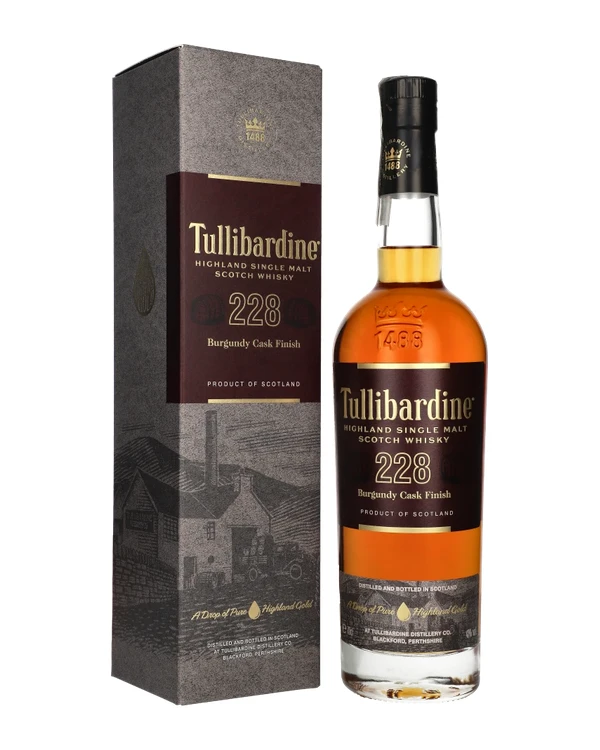
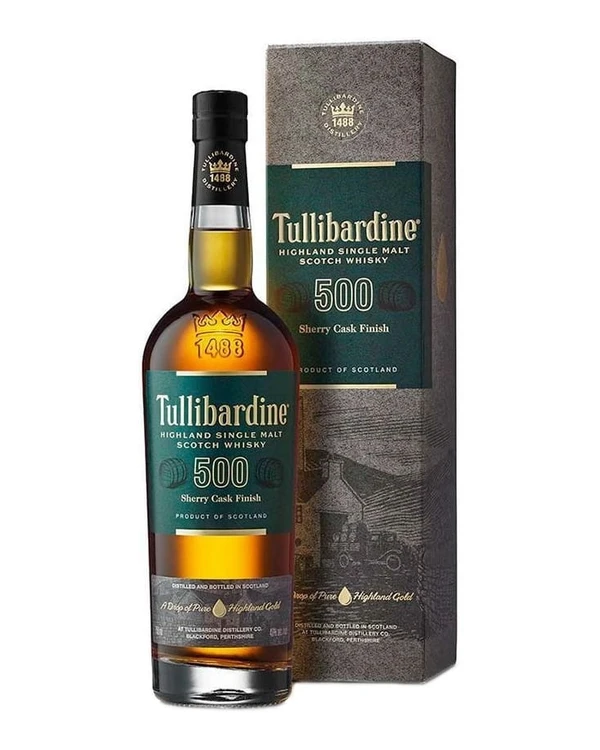
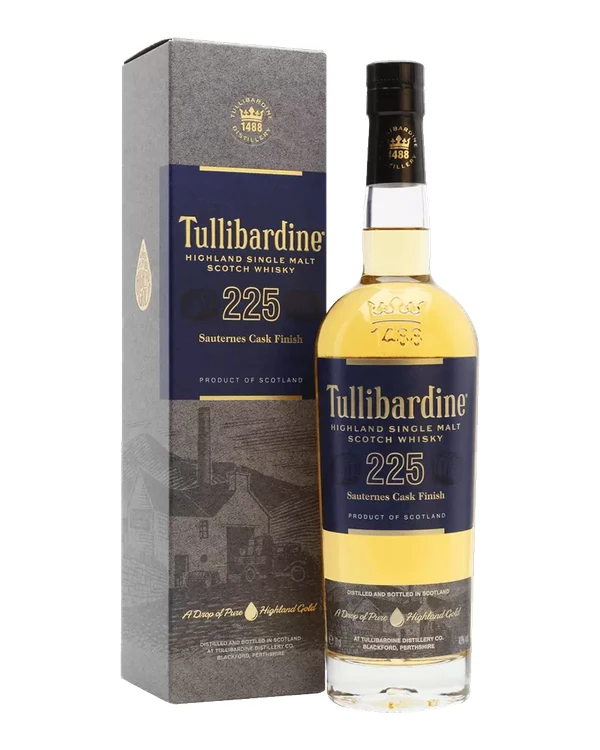
Основні розливи
Історія
Alcohol has been produced in Blackford for over six centuries. A brewery was operational in 1488 when James IV [the King who famously asked Friar John Cor to make aqua vitae from eight bolls of malt in 1495] stopped to buy a barrel of ale after his coronation at Scone. It could lay claim to be the oldest ‘public’ brewery in the kingdom.
Distilling was also tried. In 1798, William & Henry Bannerman opened the first Tullibardine distillery, though it only ran for a year. In 1814, Andrew Bannerman (presumably a relative) tried again. This time it operated until 1837. By the 19th century, the town had a maltings and three breweries: the original one, Gleneagles Brewery, now owned by the Sharp family, the other two by the Eadie family. Both of Eadie’s plants closed by the turn of the 20th century, leaving Gleneagles to soldier on until 1927. At this point it seemed as if this rich tradition had finally ceased, but in 1949 the famous distillery designer William Delme-Evans bought the Gleneagles Brewery site and built a new distillery there. It was the first to be built in Scotland since 1900.
In 1953 it was bought by blender Brodie Hepburn which increased capacity (see Glenturret) and from there via Invergordon (which bought Brodie Hepburn) into Whyte & Mackay (which in turn bought Invergordon) which promptly mothballed it, though retaining its extensive warehousing.
Tullibardine lay silent from 1994 until 2003, when a business consortium snapped it up. Their idea was to sell off some of the site as a retail park, using the money raised to get distilling up and running again.
In a similar fashion to Bruchladdich , the new owners found that most of the stock had been filled into old, tired casks which though suitable for some aspects of blending were not ideal for a stand-alone single malt brand. An extensive – and expensive – re-casking operation started along with the inevitable rash of ‘finished’ whiskies. The group sold their interest in 2011 to the French wine and spirit group, Picard which owns the Highland Queen and Muirhead’s brands and was looking for capacity.
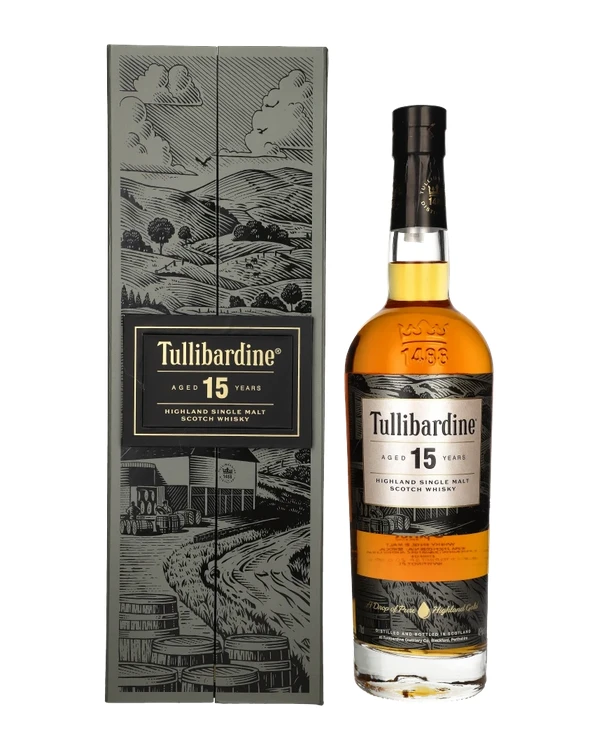
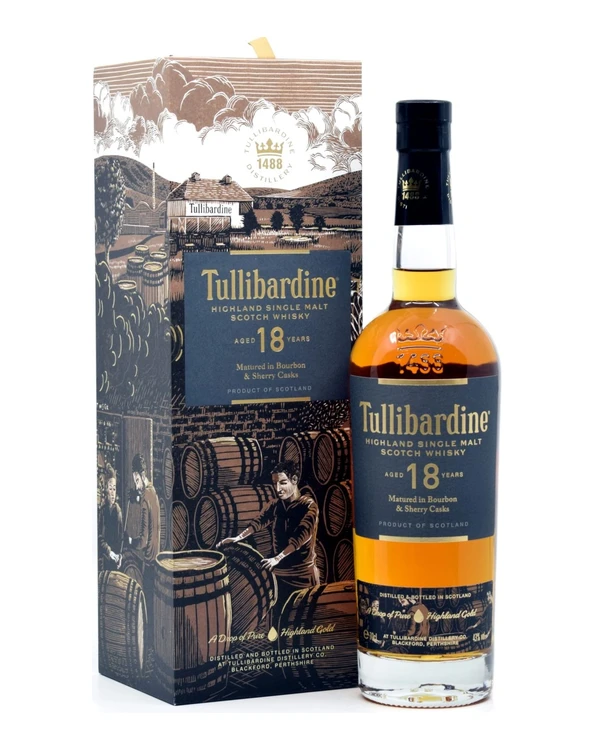
The (failed) retail park venture has been bought back and a newly repackaged and reformulated range of single malts has been introduced.
In a nod to tradition, Tulibardine has joined with Bridge of Allan brewery to produce an ale, appropriately enough called 1488.
Хронологія
- 1949 William Delme-Evans purchases the Gleneagles Brewery and builds a distillery
- 1953 The distillery is sold onto blender Brodie Hepburn
- 1971 Brodie Hepburn is bought out by Invergordon Distillers
- 1973 Tullibardine's stills are increased to four
- 1993 Whyte & Mackay purchases Invergordon Distillers
- 1994 The distillery is closed down
- 2003 A consortium of investors purchases Tullibardine for £1.1m and brings it back into operation
- 2011 The site is sold to French wine and spirits group, Picard Vins & Spiritueux
- 2014 The Tullibardine Custodians Collection is released
Власність
Попередні власники (4)
У каталозі Усі в каталозі