Brora
Place in the hierarchy
The distillery in brief
Originally known as Clynelish, Brora has become a cult whisky.
Core bottlings
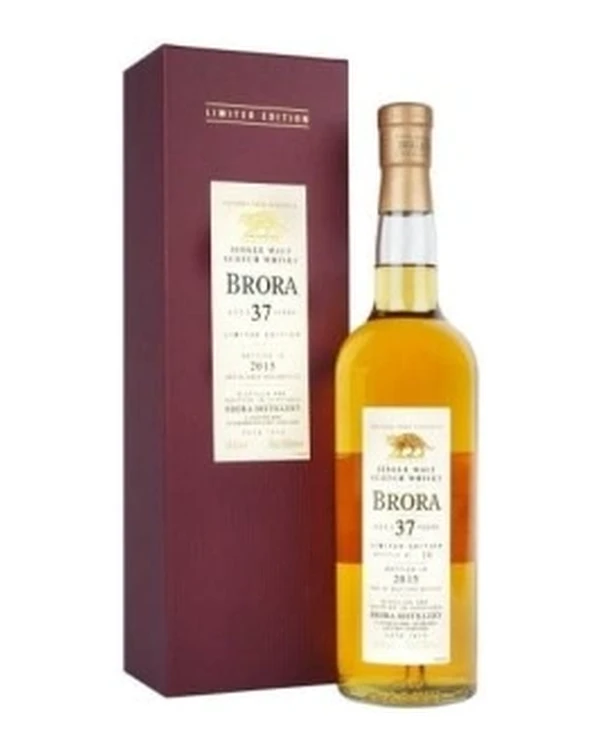
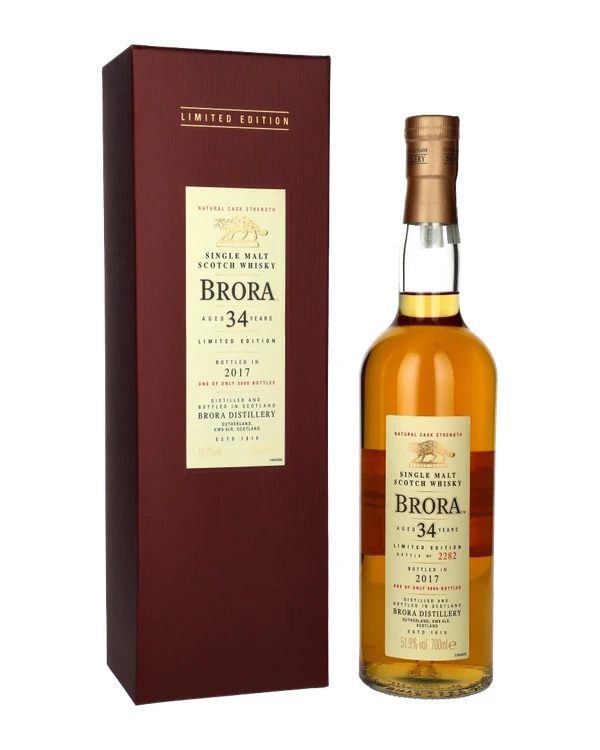
History
Brora – or as it was originally known, Clynelish – is one of Scotland’s Clearance distilleries [see also Talisker ]. It was built in 1819 by the Marquis of Stafford (later the Duke of Sutherland) who with his wife and her factors [estate managers] enacted some of the most brutal forced evictions in the Highlands, as part of an economic experiment which saw 15,000 farmers from their estate alone, moved off their land and resettled either on the coast, or sent to Canada and Australia.
Those who ended up in the new settlement at Brora were put to work in the Duke’s new business enterprises, one of which was distilling.
It took some time for the distillery to find its feet, passing through a number of lessees until George Lawson took charge. He and his sons would run the plant from 1846 to 1896 when they sold it to the Glasgow blender James Ainslie and his business partner John Risk who rebuilt the site that year.
Ainslie himself went bust in 1912 when Risk and DCL took shares in the firm, John Walker & Sons following in 1916. Risk was bought out in 1925, when Walker joined DCL and the latter took complete control in 1930.
It wasn’t until after the Second World War that the distillery began to increase capacity significantly as a result of demand for blends increasing. By 1967, this had reached such a height that it was decided that it would be easier to build a new and larger distillery – initially known as Clynelish 2 – alongside the original buildings than try to expand them.
The old distillery closed for a year, but reopened in 1969 and was in production, though not always at full capacity, until it closed in 1983.
In 1975, after a change in legislation banning two distilleries from being called the same, its name was changed to Brora. During 1972 to 1974 when DCL’s Caol Ila was being rebuilt, production of heavily peated malt was switched here. Also, during periods of drought on Islay, the production of DCL’s heavily peated requirements was switched to the far north east. This could explain why although Brora’s peating levels in general dropped after 1977, there are occasional heavily smoky expressions from the 1980s.
The distillery was closed finally in 1983, and although rumours surfaced occasionally about it reopening they seemed little more than wishful thinking.
However, in October 2017 Diageo revealed plans to reopen both Brora and Port Ellen distilleries, which also closed in 1983. Subject to planning permission, the two sites are expected to be operational once more by 2020.
Timeline
- 1819 The distillery is founded by the Marquis of Stafford [Duke of Sutherland] and run as Clynelish
- 1846 The Lawson family takes over operation
- 1896 Blender James Ainslie buys the distillery with John Risk
- 1912 Partnership agreed between John Risk and DCL
- 1916 John Walker & Sons buys shares in the distillery
- 1925 DCL takes full control of the site's operation
- 1968 A new distillery [Clynelish 2] is built next door; The original distillery closes
- 1969 The original distillery reopens
- 1972 Production of heavily peated spirit starts
- 1975 The original distillery's name changes to Brora
- 1977 Production of heavy peated malt stops (but occasional runs are made in subsequent years)
- 1983 Brora distillery is mothballed
- 2017 October: Diageo reveals plans to reopen Brora, as well as Port Ellen distillery on Islay