Glen Esk
Place in the hierarchy
The distillery in brief
Perhaps the distillery with the most name changes in its lifetime, Glenesk now operates as a maltings only.
History
One of the more remarkable aspects of Glenesk’s history is how many names the distillery managed to acquire in its 104-year history. Established on the site of a former flax mill, it commenced life in 1897 as Highland Esk under the ownership of Dundee wine and spirit merchant James Isles. Maybe sensing the downturn in the market, he handed it over to his business partner the wonderfully monikered Septimus Parsonage. He in turn only kept it for two years before selling it to J.F. Caille Heddle, who renamed it North Esk.
Like many stills, it was silent during the First World War and was then damaged by fire. When it reopened in 1919 it was solely as a maltings.
Whisky only began to be made again in 1938 when it was brought into the Associated Scottish Distilleries stable by the buccaneering Joseph Hobbs [see Glenury Royal, Lochside, Ben Nevis]. They immediately transformed it into a grain distillery and, naturally, changed its name again, this time to Montrose.
Production stopped during the Second World War and, in 1953, with ASD’s withdrawal from Scotch it became part of DCL, who ran it intermittently as a grain distillery for a decade. With expansion of other grain distilleries and a need for malt whisky in the 1960s, the distillery was changed back into a malt plant in 1964. This obviously necessitated another name change, this time to Hillside. Four years later, a large drums maltings was built alongside which was then further expanded in 1973.
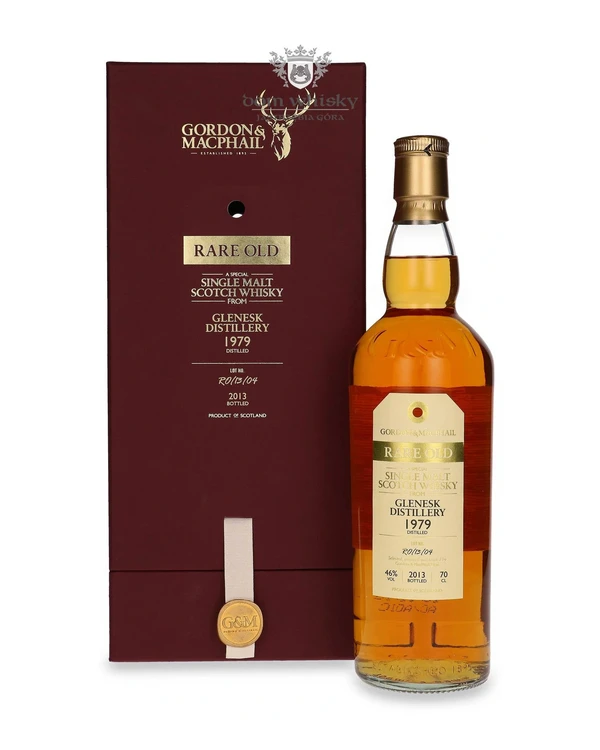
For some as yet inexplicable reason in 1980, its name was changed yet again – this time to Glenesk and it operated for a final five years before being closed, and then demolished for housing.
The maltings have however continued – and been expanded. They are now part of the Greencore group.
Timeline
- 1897 The distillery, christened as Highland Esk, is established on the site of an old flax mill
- 1898 Founder James Isles sells his share to his business partner, Septimus Parsonage
- 1899 Parsonage sells up to J.F. Caille Heddle, and the distillery is renamed North Esk
- 1914 The distillery closes during WWI
- 1919 The distillery catches fire, and is subsequently used solely as maltings.
- 1939 The distillery is converted to grain whisky production and renamed Montrose
- 1953 Montrose is bought by DCL
- 1964 The site is converted back into a malt distillery and renamed yet again, this time as Hillside
- 1970 A drum maltings is built alongside the distillery
- 1980 The site's name changes again, and is now called Glenesk
- 1985 The distillery ceases operation, but continues as a maltings
- 1997 Glenesk is acquired by Greencore Maltings Group